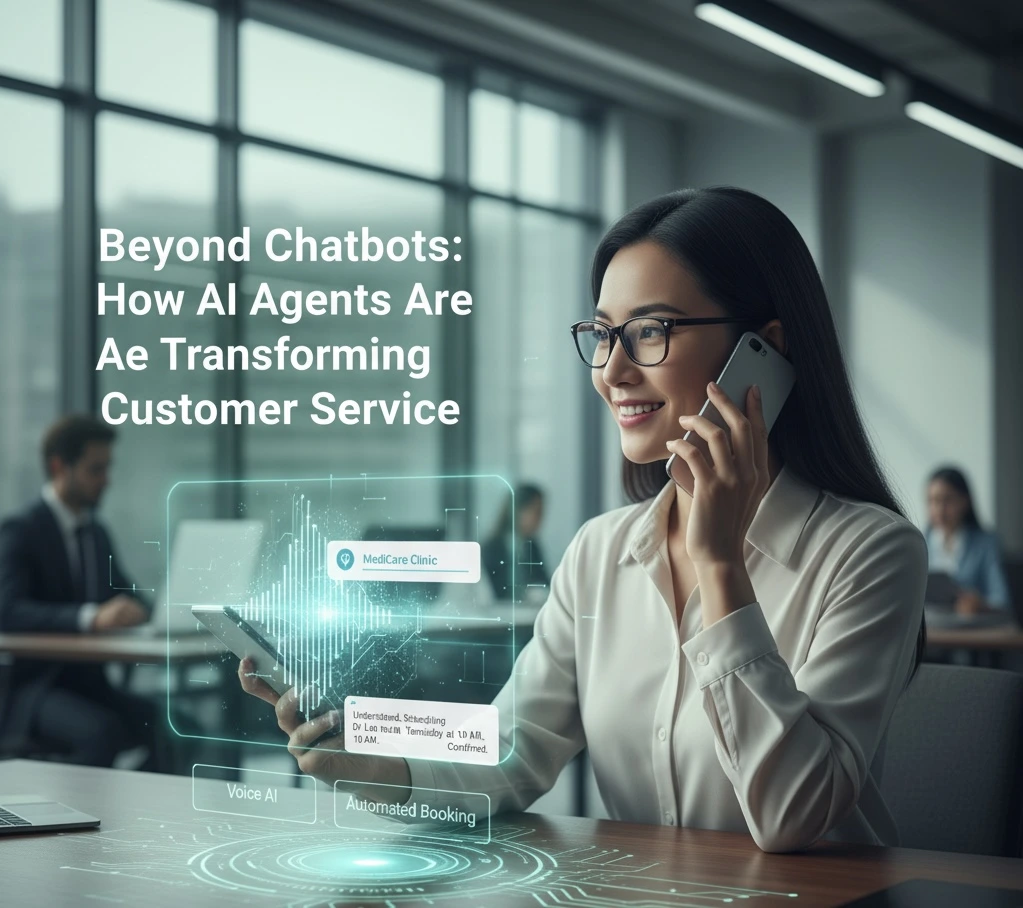
The customer service landscape is experiencing a revolutionary transformation that extends far beyond the simple chatbots of yesterday. Today's advanced AI agents are intelligent, empathetic, and capable of handling complex customer interactions with a level of sophistication that was unimaginable just a few years ago. This evolution represents a fundamental shift in how businesses approach customer experience and support.
The Limitations of Traditional Chatbots
Traditional chatbots, while useful for basic inquiries, have significant limitations that often frustrate customers:
- Rigid script-based responses: Limited to pre-programmed answers
- Lack of context understanding: Inability to grasp nuanced customer needs
- Poor escalation handling: Awkward transitions to human agents
- One-size-fits-all approach: No personalization based on customer history
- Limited problem-solving capability: Cannot handle complex or unique issues
These limitations often result in customer frustration, leading to the familiar refrain: "I want to speak to a human agent."
Enter Intelligent AI Agents
Modern AI agents represent a quantum leap in customer service technology. These sophisticated systems combine natural language processing, machine learning, emotional intelligence, and contextual understanding to deliver genuinely helpful customer experiences.
Key Capabilities of Advanced AI Agents
Today's AI customer service agents possess remarkable capabilities:
Contextual Understanding
Unlike traditional chatbots, modern AI agents can understand context, subtext, and implied meanings in customer communications. They analyze not just what customers say, but what they mean, considering factors like:
- Customer history and preferences
- Previous interaction patterns
- Product or service usage data
- Emotional state and sentiment
Emotional Intelligence
Advanced AI agents can detect and respond to customer emotions appropriately. They can:
- Recognize frustration and adjust their communication style
- Express empathy and understanding
- Escalate to human agents when emotional support is needed
- Maintain a consistent, brand-appropriate tone
"Our new AI customer service agents have achieved a 94% customer satisfaction rate by combining technical problem-solving with genuine emotional understanding. Customers often comment that they didn't realize they were speaking with an AI agent."
Real-World Applications and Success Stories
Leading companies across industries are implementing advanced AI agents with remarkable results:
E-commerce and Retail
Retail AI agents are transforming the shopping experience by:
- Providing personalized product recommendations
- Handling complex return and exchange processes
- Assisting with order tracking and delivery issues
- Offering styling advice and product comparisons
Financial Services
Banks and financial institutions use AI agents for:
- Account inquiries and transaction support
- Fraud detection and security alerts
- Investment advice and portfolio management
- Loan application assistance and credit inquiries
Healthcare
Healthcare AI agents provide:
- Appointment scheduling and rescheduling
- Symptom assessment and triage
- Prescription refill reminders
- Insurance and billing support
The Technology Behind the Transformation
Several technological advances have made this customer service revolution possible:
Natural Language Processing (NLP)
Advanced NLP allows AI agents to:
- Understand complex, conversational language
- Process multiple languages and dialects
- Recognize speech patterns and accents
- Interpret slang and colloquial expressions
Machine Learning and Deep Learning
ML algorithms enable AI agents to:
- Learn from every customer interaction
- Improve response accuracy over time
- Adapt to changing customer needs and preferences
- Predict customer needs before they're expressed
Knowledge Graph Integration
Sophisticated knowledge management systems allow AI agents to:
- Access comprehensive product and service information
- Understand relationships between different concepts
- Provide accurate, up-to-date information
- Connect related issues and solutions
Benefits for Businesses and Customers
The implementation of advanced AI customer service agents delivers significant benefits for both businesses and their customers:
Business Benefits
- Cost Reduction: 60-80% reduction in customer service costs
- 24/7 Availability: Round-the-clock customer support without additional staffing
- Scalability: Handle unlimited simultaneous conversations
- Consistency: Uniform service quality and brand representation
- Data Insights: Rich analytics on customer needs and preferences
Customer Benefits
- Instant Response: No waiting in queues or for business hours
- Personalized Service: Tailored responses based on individual history
- Multi-channel Support: Consistent experience across all platforms
- Faster Resolution: Quick access to information and solutions
- Reduced Frustration: More intelligent and helpful interactions
Implementation Best Practices
Successfully implementing AI customer service agents requires careful planning and execution:
Start with Clear Objectives
Define specific goals for your AI agent implementation:
- Customer satisfaction targets
- Response time improvements
- Cost reduction goals
- Resolution rate objectives
Design for Seamless Escalation
Create smooth handoff processes when human intervention is needed:
- Context preservation during escalation
- Clear escalation triggers and criteria
- Human agent training on AI collaboration
- Customer notification about handoff process
Continuous Training and Improvement
Implement ongoing optimization processes:
- Regular analysis of conversation logs
- Feedback incorporation from customers and agents
- Performance monitoring and adjustment
- Updates to knowledge base and responses
Challenges and Considerations
While AI agents offer tremendous benefits, organizations must address several challenges:
Privacy and Security
Protecting customer data requires:
- Robust encryption and security protocols
- Compliance with privacy regulations
- Transparent data usage policies
- Regular security audits and updates
Maintaining Human Touch
Balance automation with human connection:
- Recognize when human empathy is essential
- Preserve emotional connections with customers
- Maintain brand personality and values
- Ensure accessibility for all customer segments
The Future of AI Customer Service
The evolution of AI customer service agents continues with exciting developments on the horizon:
Predictive Customer Service
AI agents will anticipate customer needs before issues arise, proactively reaching out with solutions and support.
Multimodal Interactions
Future agents will seamlessly integrate text, voice, video, and visual inputs to provide richer, more comprehensive support experiences.
Hyper-Personalization
Advanced AI will create truly personalized experiences, adapting not just content but communication style, tone, and approach to each individual customer.
Getting Started with AI Customer Service Transformation
Organizations ready to implement advanced AI customer service agents should:
- Assess current customer service processes and pain points
- Define clear objectives and success metrics
- Choose the right AI platform and technology partners
- Start with pilot programs in specific areas
- Train staff on AI collaboration and management
- Continuously monitor, measure, and optimize performance
The transformation from simple chatbots to intelligent AI agents represents more than just technological advancement—it's a fundamental reimagining of customer service. Organizations that embrace this evolution will not only reduce costs and improve efficiency but also create deeper, more meaningful connections with their customers in an increasingly digital world.