The enterprise automation landscape has undergone a remarkable transformation over the past decade. What began as simple rule-based task automation has evolved into sophisticated AI-powered systems capable of managing complex, end-to-end business processes. This evolution represents more than just technological advancement—it's a fundamental shift in how modern enterprises operate, compete, and deliver value in an increasingly digital world.
The Evolution of Enterprise Automation
Traditional automation began with basic task bots designed to handle repetitive, rule-based activities. These early systems, while effective for simple processes, were limited by their inability to adapt to changing conditions or handle exceptions. The introduction of AI and machine learning has transformed these static tools into dynamic, intelligent systems capable of learning, adapting, and making decisions.
From Rules to Intelligence
The journey from task bots to autonomous workflows represents several evolutionary stages:
- Rule-Based Automation (RPA): Simple if-then logic for repetitive tasks
- Cognitive Automation: Addition of OCR, NLP, and basic AI capabilities
- Intelligent Automation: Machine learning integration for decision-making
- Autonomous Workflows: End-to-end process management with minimal human intervention
Understanding Autonomous Workflows
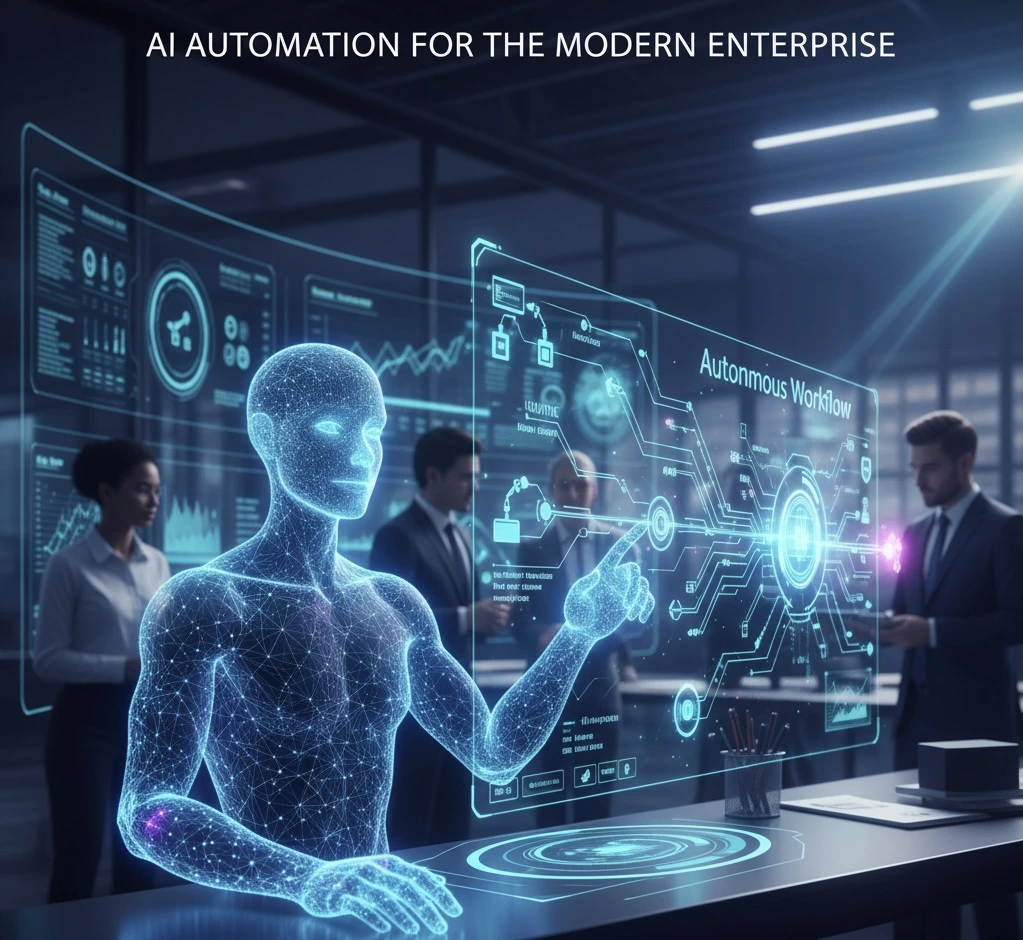
Autonomous workflows represent the pinnacle of enterprise automation evolution. These systems can orchestrate complex business processes across multiple departments, systems, and external partners while continuously optimizing performance based on real-time data and historical patterns.
Key Characteristics of Autonomous Workflows
Modern autonomous workflows possess several defining characteristics that set them apart from traditional automation:
- Contextual Awareness: Understanding of business context, priorities, and constraints
- Dynamic Adaptation: Ability to modify processes based on changing conditions
- Exception Handling: Intelligent management of unexpected situations
- Cross-System Integration: Seamless interaction with multiple enterprise systems
- Continuous Optimization: Self-improving performance through learning algorithms
Enterprise Applications and Benefits
The implementation of autonomous workflows is delivering measurable benefits across various enterprise functions:
Finance and Accounting
In financial operations, autonomous workflows are transforming processes such as:
- Invoice processing and approval routing
- Financial reporting and compliance monitoring
- Budget planning and variance analysis
- Risk assessment and fraud detection
"Our autonomous finance workflows have reduced processing time by 75% while improving accuracy to 99.8%. The system now handles complex approval chains and exception cases that previously required significant manual intervention."
Human Resources
HR departments are leveraging autonomous workflows for:
- Candidate screening and interview scheduling
- Employee onboarding and training coordination
- Performance review management
- Benefits administration and policy compliance
Supply Chain Management
Supply chain operations benefit from autonomous workflows that manage:
- Demand forecasting and inventory optimization
- Supplier relationship management
- Order processing and fulfillment
- Quality control and compliance monitoring
Implementation Strategy and Best Practices
Successfully implementing autonomous workflows requires a strategic approach that considers both technical and organizational factors:
Assessment and Planning
Begin with a comprehensive assessment of current processes to identify:
- High-volume, repetitive tasks suitable for automation
- Process bottlenecks and inefficiencies
- Data quality and system integration requirements
- Regulatory and compliance considerations
Phased Implementation Approach
A phased approach reduces risk and allows for iterative improvement:
- Pilot Phase: Start with low-risk, high-impact processes
- Expansion Phase: Scale successful pilots to additional areas
- Integration Phase: Connect workflows across departments
- Optimization Phase: Continuous improvement and advanced features
Technology Infrastructure Requirements
Successful autonomous workflow implementation requires robust technological infrastructure:
Core Platform Components
- Workflow Engine: Orchestrates process execution and decision-making
- AI/ML Services: Provides intelligence for decision-making and optimization
- Integration Layer: Connects with existing enterprise systems
- Data Management: Ensures data quality and accessibility
- Monitoring and Analytics: Tracks performance and identifies improvements
Security and Compliance
Enterprise-grade security measures are essential:
- Role-based access controls and authentication
- Audit trails and compliance reporting
- Data encryption and privacy protection
- Disaster recovery and business continuity planning
Measuring Success and ROI
Quantifying the impact of autonomous workflows requires comprehensive metrics:
Operational Metrics
- Process completion time reduction
- Error rate improvements
- Resource utilization optimization
- Customer satisfaction scores
Financial Metrics
- Cost savings from reduced manual effort
- Revenue improvements from faster processing
- Compliance cost reductions
- Overall return on investment (ROI)
Overcoming Implementation Challenges
Organizations commonly face several challenges when implementing autonomous workflows:
Change Management
Employee resistance to automation can be addressed through:
- Transparent communication about benefits and impacts
- Comprehensive training and reskilling programs
- Involvement of employees in design and implementation
- Clear career development paths in the automated environment
Technical Challenges
Common technical hurdles include:
- Legacy system integration complexity
- Data quality and standardization issues
- Scalability and performance requirements
- Security and compliance considerations
Future Trends and Innovations
The future of enterprise automation will be shaped by several emerging trends:
Hyperautomation
The combination of multiple automation technologies to create end-to-end automated business processes that span entire organizations.
Predictive Automation
AI systems that anticipate needs and proactively initiate workflows before problems occur or opportunities arise.
Collaborative Intelligence
Enhanced human-AI collaboration where autonomous systems augment human decision-making rather than replacing it entirely.
Getting Started with Autonomous Workflows
Organizations ready to embark on their autonomous workflow journey should:
- Conduct a comprehensive process audit to identify automation opportunities
- Develop a clear automation strategy aligned with business objectives
- Invest in the necessary technological infrastructure and skills
- Start with pilot projects to demonstrate value and build organizational confidence
- Plan for ongoing optimization and scaling of successful implementations
The transformation from task bots to autonomous workflows represents a fundamental shift in how enterprises operate. Organizations that embrace this evolution will gain significant competitive advantages through improved efficiency, reduced costs, and enhanced agility in an increasingly dynamic business environment.